
When Should You Add a Teen Driver to Texas Auto Insurance?
Learn when to notify your insurer about a Texas teen driver, what to confirm during the permit stage, and what to review before solo driving.
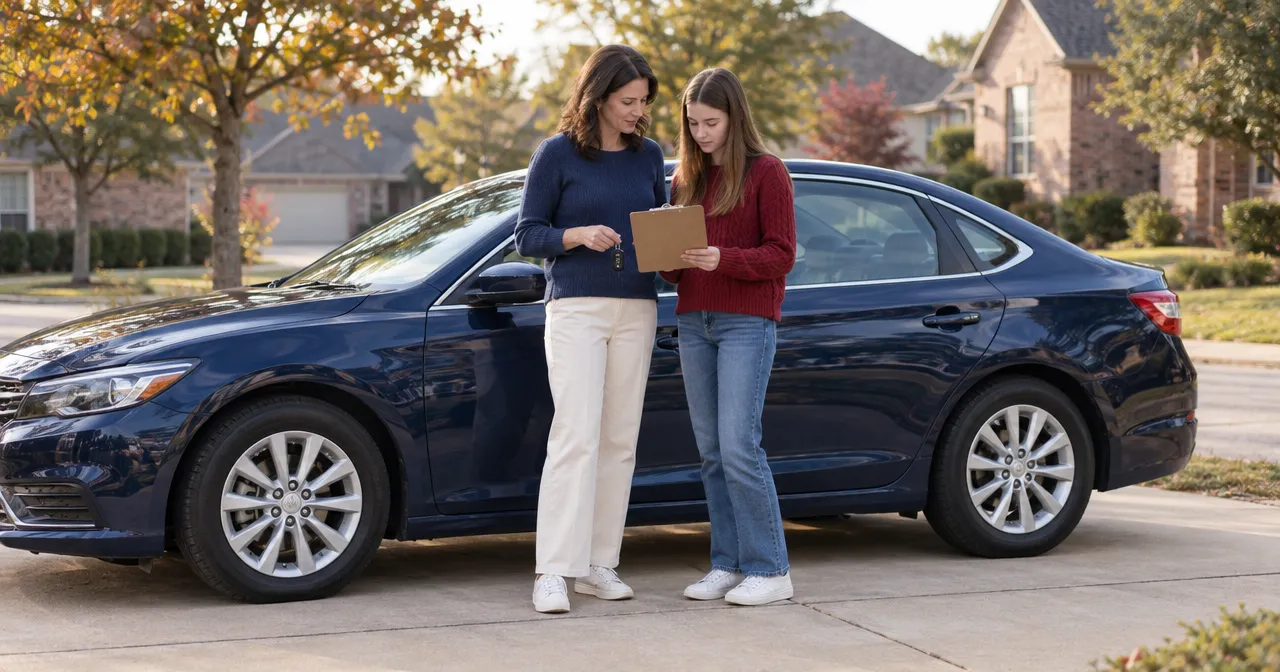
Contact your auto insurer before your teen starts practicing in a family vehicle, then confirm any required policy change before the first solo drive. A learner permit does not settle the insurance question. Ask when your insurer requires the teen to be listed and when any added charge begins.
For families in Aubrey and across Texas, the useful distinction is between permission to drive under state licensing rules and coverage under a particular insurance policy. Handle both before handing over the keys.
Notify the insurer during the learner-permit stage
The Texas Department of Insurance’s guidance on adding a teen driver says a teen with a learner permit is not legally required to have insurance just for holding that permit. It also says to tell your insurance company when a teen is learning in your vehicle. Failing to disclose a student driver can put a claim or the policy at risk.
Do not turn that permit distinction into an assumption that notification can wait. Ask your insurer: “My teen will practice in our vehicles. What do you require now, and what changes when they become licensed to drive alone?” Request written confirmation of the answer for your policy.
Set a second checkpoint before the first solo drive
The Texas Department of Public Safety’s provisional-license guidance distinguishes a learner license, used for practice with a licensed adult, from a provisional license, which allows independent driving with restrictions.
For provisional drivers, DPS lists restrictions on unrelated passengers under 21, driving between midnight and 5 a.m. with specified exceptions, and cellphone use, including hands-free use except in an emergency. Insurance does not replace those licensing requirements.
DPS also requires proof of current registration and insurance for the test vehicle when taking the driving test at a driver license office. That document check is not a substitute for confirming how your own policy handles the teen afterward.
Put a reminder on the family calendar before the test date. Ask the insurer what information it will need, how to report the license change, and what effective date to request. The effective date is when the policy change begins. Do not rely on an assumed grace period or wait for the plastic license to arrive in the mail.
Explain the household and vehicle arrangements accurately
The TDI auto insurance guide says some insurers require everyone in the household who is of driving age to be on the policy. It advises telling the company when a family member starts driving or turns 16. It also notes that adding a young driver to a family policy is usually less expensive than buying a separate policy, though your own options and cost need an individual review.
Tell the insurer where your teen lives, which vehicles they can use, who owns those vehicles, and which one they will drive most. If the teen splits time between two homes, describe both arrangements rather than assuming one parent’s policy answers every question.
A useful description is specific: “Our daughter lives with us during the school week, stays with her other parent on alternate weekends, and may drive a car at each home.” Ask each insurer what it needs to know and how coverage applies.
Do not describe a regular driver as an occasional visitor just because the teen does not own a car. Ask the insurer to explain its requirements using the actual schedule.
Review protection, not just the added premium
A premium is the price charged for insurance. A limit is the most a coverage will pay, subject to the policy. Before comparing the added premium, identify which protection you are buying.
The Texas Office of Public Insurance Counsel’s auto coverage overview explains the main categories:
- Liability addresses injuries or property damage you cause others. Texas requires financial responsibility; most drivers meet it with liability insurance. Minimum policy limits are $30,000 for injuries per person, $60,000 for injuries per accident, and $25,000 for property damage per accident—often written as 30/60/25.
- Collision addresses damage to your own vehicle from a collision.
- Comprehensive, also called other-than-collision coverage, addresses covered events such as theft, hail, fire, or flood.
- Uninsured/underinsured motorist coverage addresses certain losses involving a driver without insurance or enough insurance.
- Personal injury protection, or PIP, addresses certain medical and other costs regardless of fault.
Minimum liability insurance does not pay to fix your family’s car. A lender or leasing company may require collision and comprehensive under its contract; that is different from the state’s financial-responsibility requirement. Ask which protections, limits, and deductibles apply to each vehicle your teen may drive.
Use two separate examples to test your choices
Consider a hypothetical Aubrey household whose teen will drive a paid-off sedan to school. The family is reviewing liability limits and the collision deductible. These are different decisions, even though both affect the overall insurance budget.
Example one: damage to someone else’s vehicle. Suppose a covered at-fault accident causes $38,000 of damage to another car, but the applicable property-damage liability limit is $25,000. The difference is $13,000. That illustrates why a legal minimum is not the same as enough protection for every accident. Actual responsibility and payment depend on the facts and policy.
Ask for a comparison with higher liability limits while leaving the other quote details unchanged. That makes the price difference easier to evaluate than changing several coverages at once.
Example two: damage to the family sedan. Suppose a covered collision produces an accepted $4,500 repair amount. With a $500 deductible, a simplified payment would be $4,000. With a $1,000 deductible, it would be $3,500. The higher deductible shifts another $500 of that repair cost to the household.
A deductible is the portion of an applicable covered claim you pay yourself. These numbers are illustrations, not claim estimates. Ask what premium difference accompanies each deductible, then decide whether the family could comfortably fund its share of a repair. Do not confuse lowering the premium with lowering the cost of an accident.
Ask about discounts without assuming a savings amount
TDI’s auto insurance discount guidance notes that companies do not all offer the same discounts. Good-student, low-mileage, safe-car, and multi-car discounts are among the possibilities worth asking about.
For your teen, ask which discounts are available, what documentation is required, and when eligibility must be checked again. For example, ask whether the company needs a current report card and whether a completed driver-education course qualifies for any separate credit.
If an insurer offers a driving-monitoring program, ask what information it collects and how participation or driving results can affect the price. Do not enroll based only on an advertised maximum discount.
Request the actual quote for your household. Avoid budgeting around a neighbor’s added premium or a percentage found online. Write down which discounts are included so a later comparison is based on the same assumptions.
Describe the trips your teen will actually make
Use a normal week as your starting point: school, practice, a part-time job, weekend visits, and any other regular driving. For a North Texas family, distinguish a short local trip from a regular commute across the Dallas–Fort Worth area. Give the insurer your own estimated distance and schedule, not a regional average.
TDI’s auto insurance shopping checklist specifically recommends asking whether a policy covers how you use the car and whether exclusions apply. An exclusion is policy wording that removes coverage for a particular situation.
If your teen plans to deliver food or other items for pay, say so before that work begins and ask what coverage is needed. Likewise, explain any planned use of a business-owned vehicle. Do not assume that listing the teen on a personal policy answers a separate business-use question.
When reviewing quotes, keep the driver information, vehicle use, limits, and deductibles consistent. A lower total is not an equal comparison if important protection has also been removed.
Bring this information to the coverage conversation
Prepare a short note rather than trying to remember every detail during the call:
- The licensing timeline. Include the current permit status and the expected driving-test date. Ask what to report after the appointment.
- The household arrangement. Explain where the teen lives and whether vehicles at another home will be available.
- The vehicles. List each vehicle the teen may drive, who owns it, and whether it has a loan or lease. Have the vehicle identification numbers handy if requested.
- The driving plan. Note the main vehicle, usual trips, approximate mileage, and any paid delivery or business use.
- The current insurance documents. Bring the declarations page—the policy summary showing coverages, limits, and deductibles—and any notices or exclusions you want explained.
- The family’s questions. Include the deductible you could fund, the liability limits you want compared, and any discount documents the insurer has requested.
For example, your note might read: “Permit now; driving test expected next month; family sedan for school and an evening job; no delivery work planned. Please confirm what must change before solo driving and quote the same coverages with both deductible options.”
Keep sensitive information such as license numbers out of a general website message unless the agency directs you to an appropriate way to provide it.
Confirm the change, then keep the record
After requesting the update, ask for confirmation of the teen’s status, the effective date, the vehicles addressed, and the premium change. Review the documents you receive. If something differs from your request, ask about it before relying on an assumption.
Set another reminder if the teen buys a car, changes homes, starts driving for work, or takes a vehicle to school elsewhere. Those are reasons for a fresh conversation, not reasons to guess whether the original arrangement still fits.
Your next step: Find your declarations page and your teen’s permit or test date, then contact Kiesling Insurance Agency with your timing question. The team can help you review driver and vehicle information, coverage choices, limits, and deductibles. Call (469) 447-5500 or send an inquiry through the website about what to confirm before your teen drives alone.